The art of old-school teaching: rekindling creativity in the digital era
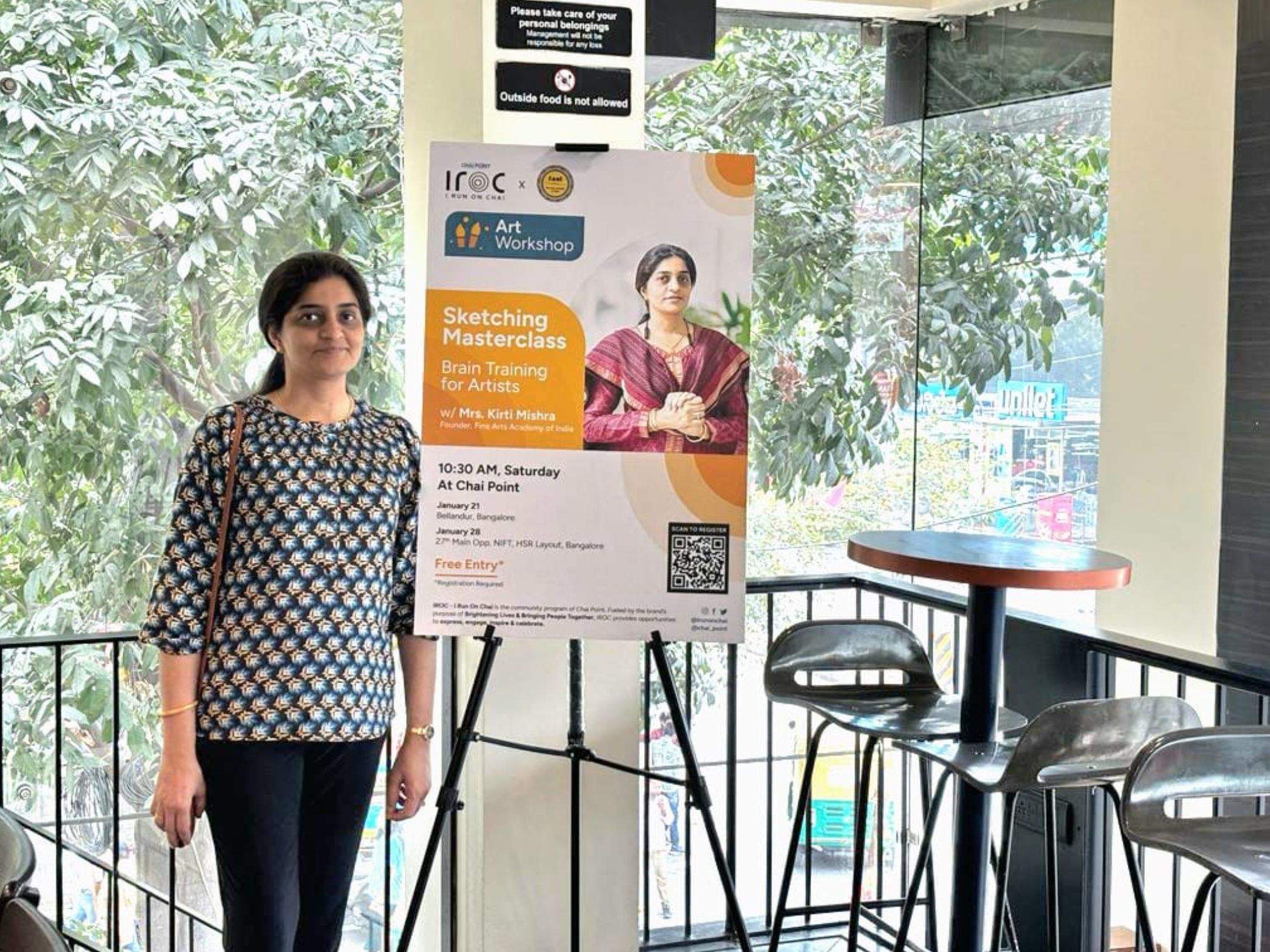
In an age dominated by digital shortcuts and fleeting trends, Kirti Mishra’s journey as an art educator celebrates enduring values.
In a world dominated by instant gratification and fleeting social media trends, there is a sanctuary of timeless wisdom where art is more than a skill – it is a philosophy, a process and an expression of individuality.
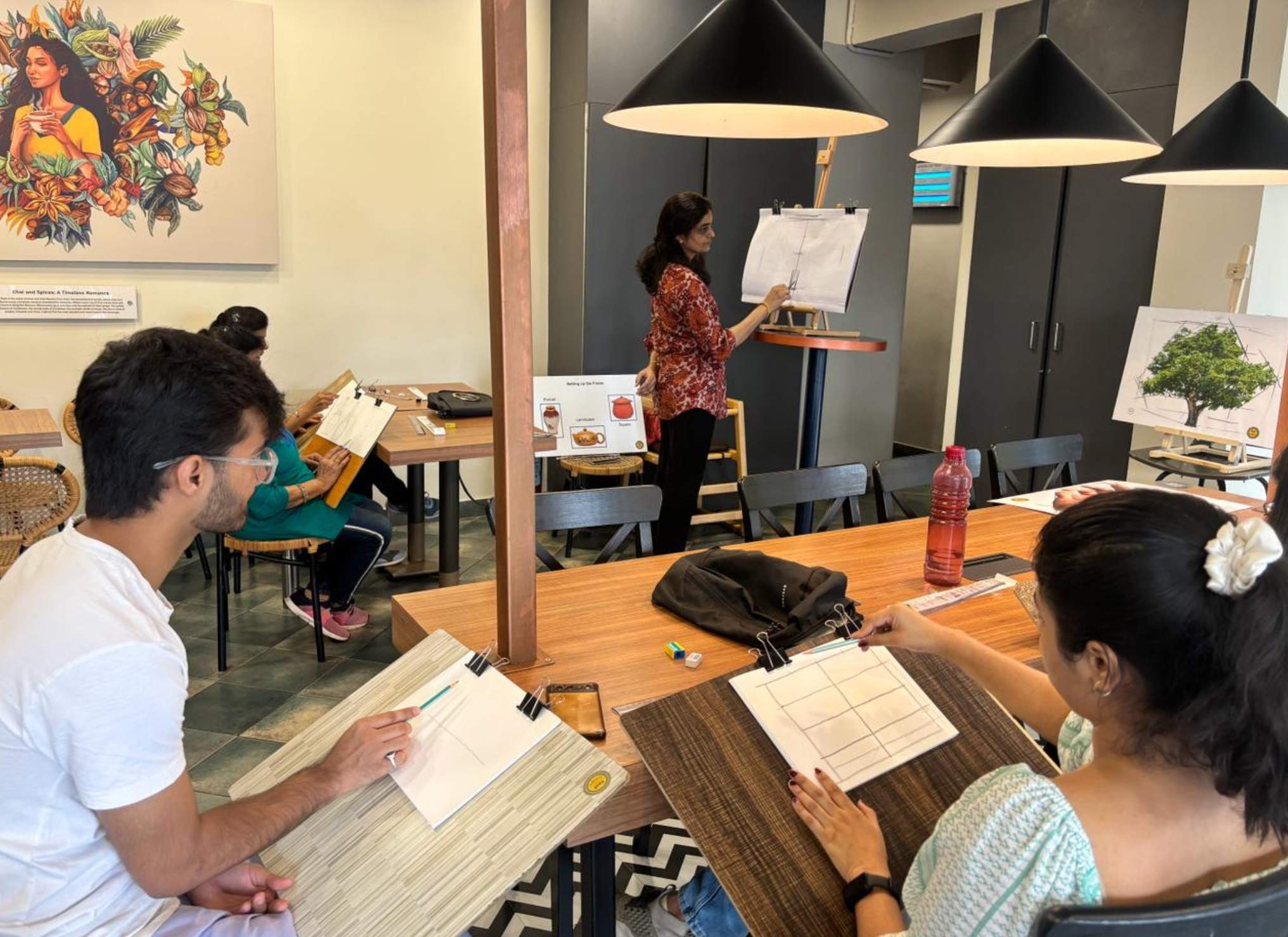
Kirti Mishra, the founder of the Fine Arts Academy of India (FAAI), is a testament to the enduring power of old-school art. Her 16-year journey as an art teacher emphasises the resilience of traditional teaching methods and their profound impact on creativity.
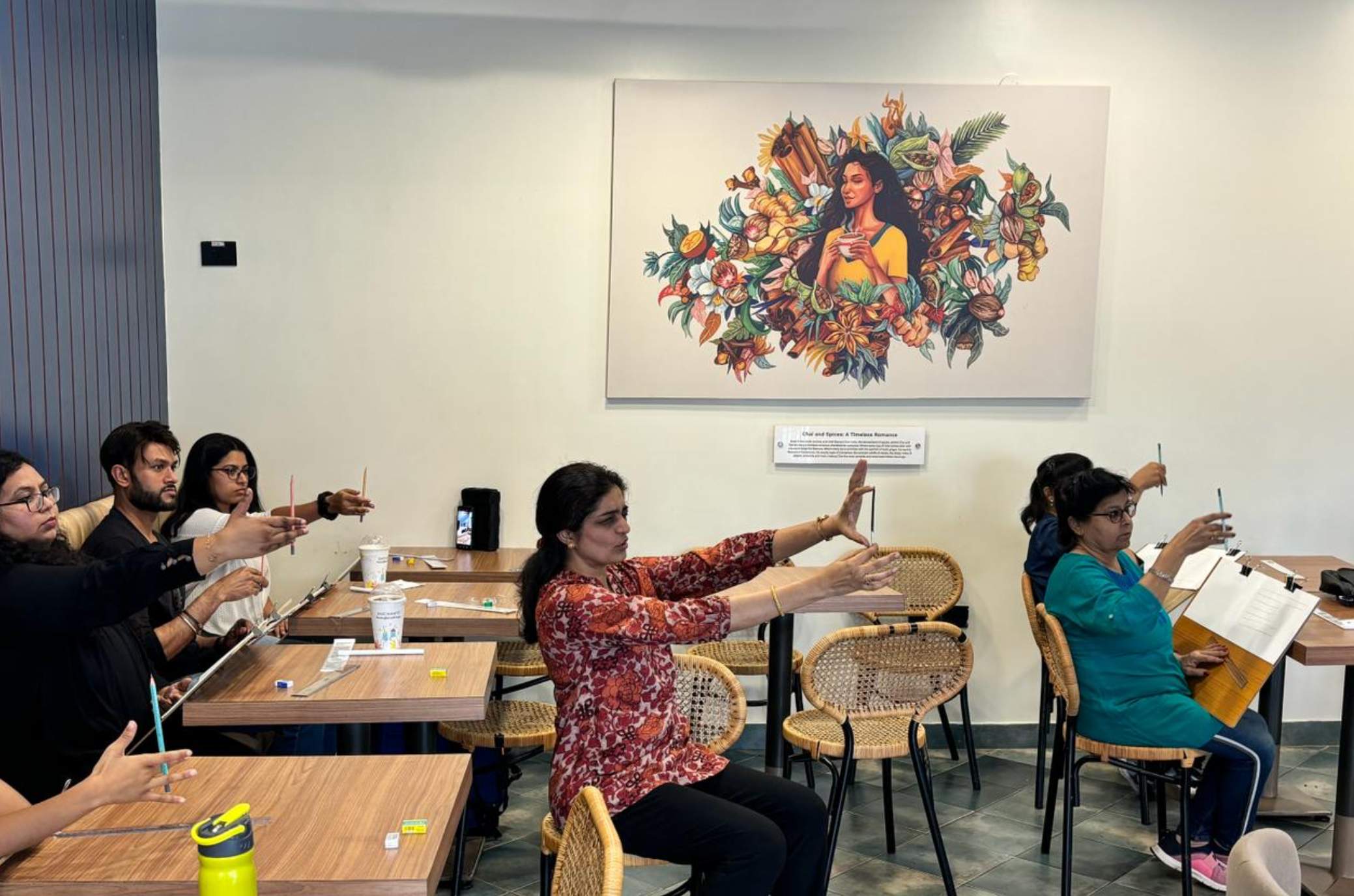
A journey rooted in passion
What began as a humble endeavour with five children around her dining table has blossomed into a thriving institution. Kirti Mishra’s transformation from a computer science teacher with an MCA degree to a renowned art educator reflects her unwavering passion for learning.
Her fascination for arts was awakened during her years in the United States, where she studied the works of historical masters. What followed was a rigorous pursuit of knowledge through certifications, a diploma and a Bachelor of Fine Arts degree.
For Kirti the pursuit of learning never ends. “Academics gave me a strong foundation, but the real lesson came when I taught hundreds of students from different walks of life," she says.
A philosophy passed on by her father serves as her guiding principle: “Not everything in life has to bring instant results. If your work brings you joy and helps you grow as a person, then it is a worthwhile endeavour.”
Art as a language of expression
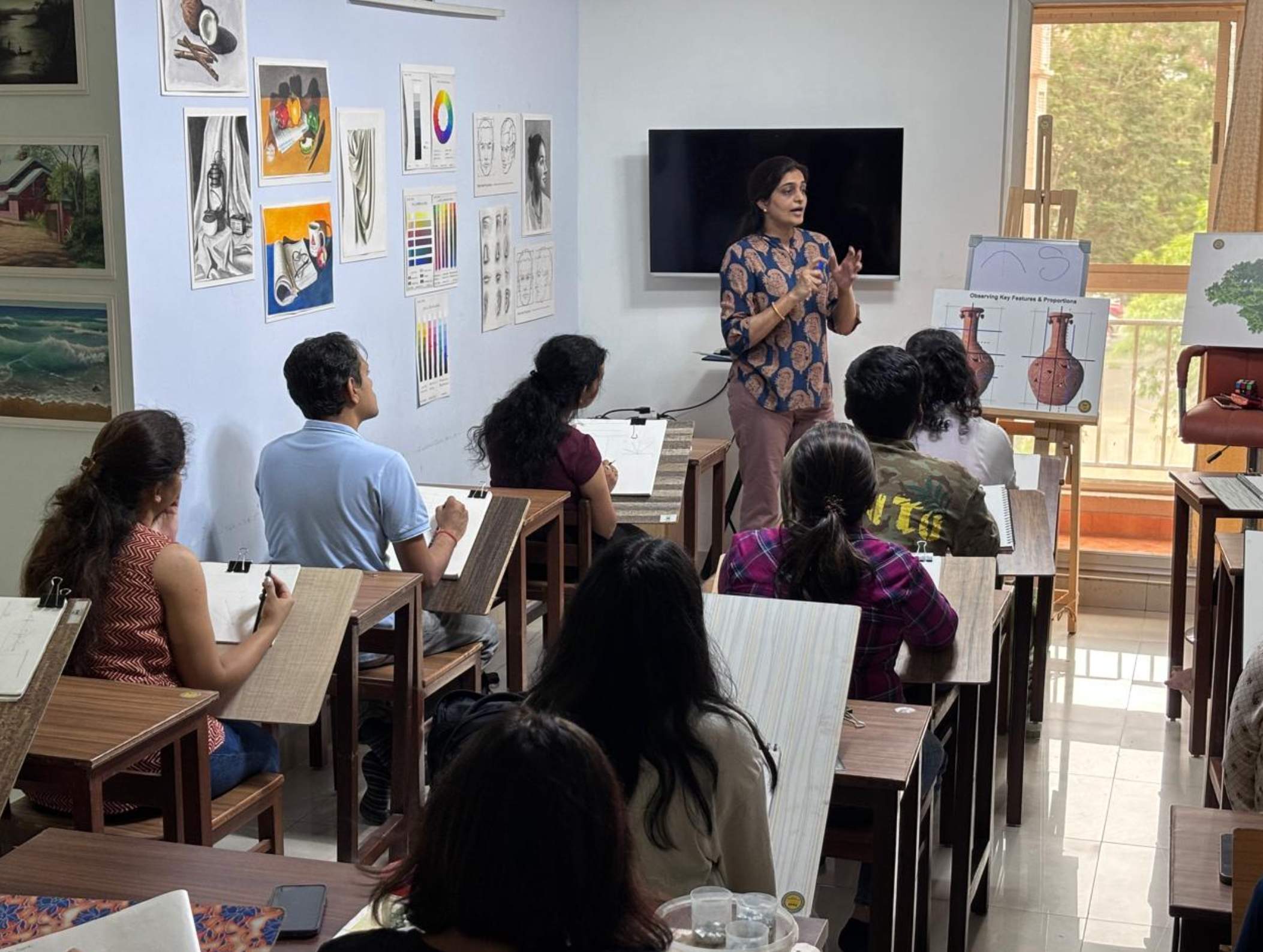
For Kirti, art is a language that goes beyond visual appeal. “It's a mixture of thoughts, feelings and science,” she explains. Teaching art is like teaching a new language. Students need to master the basics before they can create their own compositions.
When she started teaching, she noticed a common fear among her students – the fear of the blank page. “Many students hesitate to make the first mark,” she notes. “My job is to take away this fear and teach them the joy of creating.”
Her teaching methods emphasise the “elements of art", basic concepts such as colour theory, shapes and textures. By simplifying these ideas, she empowers students to see the world as a canvas waiting to be explored.
She believes in the power of simplicity and ingenuity and teaches her students to create a whole spectrum of colours with just three basic tones. This approach not only enhances understanding of colour theory, but also encourages creativity and precision, demonstrating her exceptional ability to make the complex beautifully simple.
The personalised approach to teaching
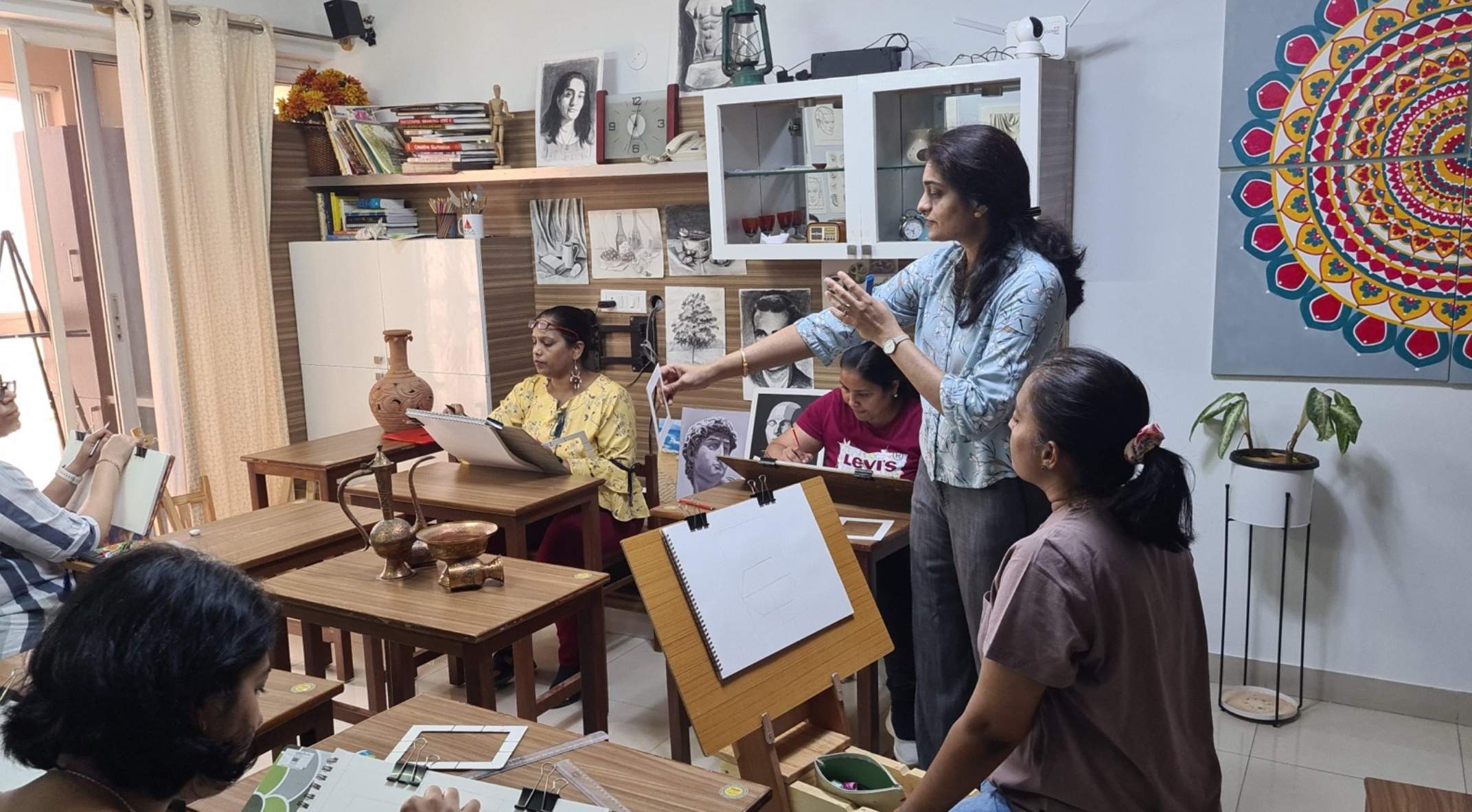
Although she teaches in groups, Kirti has mastered the art of personalising her lessons. “Every student is unique and I make it a point to engage with them individually,” she says. This customised approach not only boosts their confidence, but also allows them to explore art in a way that suits their personal interests.
For younger students, she focuses on building a visual library through observation. “I encourage them to be inspired by their surroundings – be it objects, nature or even everyday moments,” she says. This foundation helps them excel in practical scenarios such as school projects, poster competitions and greeting card design.
For older students, her focus shifts to the therapeutic aspects of art. Abstract techniques such as mandalas serve as a meditation exercise and help them cope with the stress and emotional challenges of daily life. “When I paint, I feel disconnected from the real world,” she says, “It’s a state of deep meditation that heals and re-energises. I want my students to experience the same sense of peace.”
The value of old-school wisdom
Kirti is a staunch advocate of the art principles of the “old school” and draws inspiration from legendary figures such as Andrew Loomis and Edward Payne. These masters dedicated their lives to deciphering the science behind art and offered systematic approaches to concepts such as human anatomy, tonal value and compositional balance.
“Andrew Loomis is like a god to me,” she says, “His works systematically explain every aspect of fine art, from figure drawing to portraiture. Edward Payne’s exploration of landscape – how to show depth, focus and use tonal values – is also an unrivalled resource. These artists have not only taught us techniques, but also how to see the world differently.”
For Kirti, the beauty of these ancient practises lies in their depth. They are not simply shortcuts to creating visually appealing works — they are deeply researched methods that incorporate a lifetime of understanding and respect for the craft.
The challenge of the digital age and role of AI in art
The digital age has brought with it an avalanche of content that often reduces art to a two-minute tutorial or a series of Instagram philtres. While these resources can be inspiring, she warns against oversimplifying them. “I wish more artists would share the process behind their creations,” she says. “Aspiring learners need to know that what they see is often the result of countless failed attempts and hours of practice.”
She remains optimistic about the irreplaceable value of human creativity. “Generative AI could recreate human-like artworks in the future,” she admits, “but it will never capture the personal experience of creating art – the joy, the failure and the emotional attachment to the process.” She believes that AI will challenge commercial industries, but cannot threaten the intrinsic value of traditional art forms. “Art has an identity, a story that is unique to a person. No algorithm can replicate that.”
Keeping the flame alive
At the heart of her teaching is a commitment to preserving the essence of the art of the old school. Her classes are not only about creating visually appealing artwork, but also about instilling a lifelong understanding of observation, patience and creativity.
For those who attend her academy, she offers more than just art lessons – she offers them the chance to rediscover the beauty of slowing down, observing closely and creating with purpose. In an age of immediacy, her story is a powerful reminder that true art takes time, patience and a connection to the timeless wisdom of the past.